
Generational Strength, Queer Lineage, and the Power of Community Care
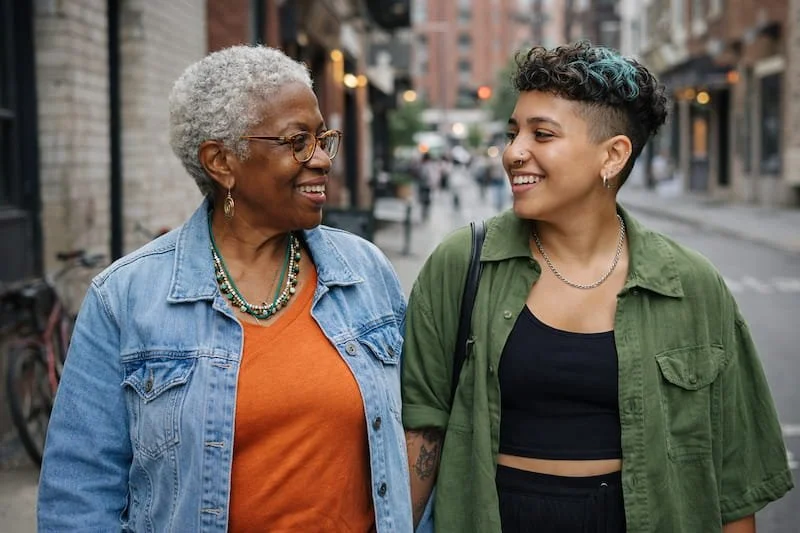
When we talk about generational strength, many of us are taught to think only about bloodlines—family trees, ancestors we’re biologically tied to, stories passed down through last names and DNA. But for queer people, that definition has always been incomplete. Our strength doesn’t only come from who we’re related to by birth. It comes from who fought before us, who protected us, who imagined a future where we could exist more freely. Our elders. Our chosen family. Our queer ancestors—named and unnamed—who survived systems that were never built for them.
Reflection: When you hear the phrase generational strength, who comes to mind for you? Who taught you how to survive, resist, or care for yourself?
Identity-Based Harm and the Weight We Carry
Identity-based harm shows up in many forms: violence, discrimination, microaggressions, denial of opportunity, and the constant threat to safety that comes from being marked as “other.” For LGBTQ+ people—especially those who are BIPOC, disabled, immigrant, or neurodivergent—this harm is cumulative. Hate-based trauma isn’t just about what happens to us directly; it’s also about what we witness, anticipate, and brace for.
In the therapy room, we often hear exhaustion. Isolation. A sense that no matter how hard someone works or how “good” they try to be, it’s still not enough. Capitalism reinforces this by tying worth to productivity, while white supremacy and cisheteropatriarchy reward perfectionism, binary thinking, and emotional suppression. These systems don’t just harm individuals—they fracture community.
Reflection: Where do you notice systemic expectations shaping how you measure your worth or safety?
Disconnection, Burnout, and Survival Responses
When identity-based harm is ongoing, disconnection makes sense. Doom scrolling. Numbing. Pulling away from others. Struggling to imagine a future that feels stable or humane. These aren’t personal failures—they’re survival responses.
We see clients who deeply value community but fear connection. Others feel moral injury—working jobs that contradict their values because survival leaves little choice. And many carry shame for participating in systems they didn’t design.
Reflection: What coping strategies have helped you survive—but might now be asking to be updated or softened?
Generational Strength Beyond Bloodlines
Queer generational strength lives in protest lines, mutual aid networks, underground care systems, and the elders who showed us what was possible. We see it today in community responses to ICE raids, in neighbors protecting neighbors, in third spaces that become chosen family. We inherit not only trauma, but wisdom—ways of caring that predate capitalism and colonialism.
Activism can be both exhausting and energizing. Learning our community’s history can be a form of healing, even when being “out in the streets” isn’t accessible. There are many ways to belong.
Reflection: What parts of queer history or community knowledge feel nourishing to you right now?
Working With Community Care
Healing doesn’t require doing everything alone. In therapy, we start with strengths—not deficits. We explore where connection already exists, how the body responds to safety, and what kinds of community feel possible now. Sometimes that’s activism. Sometimes it’s art. Sometimes it’s building one honest relationship at a time.
Queer people already know how to live outside rigid norms. Those skills—creativity, adaptability, chosen family—are pathways back to generational strength. If this resonates, you don’t have to carry it alone. Our LGBTQ Therapy services offer a space to explore identity, community care, and healing from identity-based harm.
Reflection: What would it look like to ask for support instead of proving you can do it alone?
We don’t heal in isolation. We heal by remembering who we come from—and who we’re becoming together.